
0 Comments
Share
Smooth transition to cleaner ULSD in Canada
Non-ULSD must be labeled as such.
There isn't much around in Canada now
Most truckers with current, non '07 engines will also have to fill up with ULSD -- and many in Canada have already been doing so. ULSD is backwards compatible with older engines. There are some reports of a loss in lubricity, but those issues can be taken care of with additives.
There was concern over the last year that some of 15 ppm supply could become contaminated as it came into contact with residue left from higher-sulfur products like furnace oil and jet fuel in the pipeline, and thereby rendering unmarketable. But that hasn't been the case so far.
Reports indicate that much of Canada has had ULSD in place across the country for months. In the U.S., the transition has also been smooth, except for some isolated shortages this summer in Colorado and Nebraska, which officials at the time blamed on regional effects.
"With the combination of ultra-clean truck diesel fuel and cleaner truck engines, there will be a drastic reduction in truck emissions that cause smog,” says David Bradley, CEO of the Canadian Trucking Alliance. "As the only freight mode whose fuel and engine emissions are currently regulated, trucking is at the head of the pack compared to other modes of transportation and other industries in Canada."
The environmental improvements will not come without costs though, says CTA. According to petroleum producers the cost to manufacture the ultra low sulfur diesel fuel is at least 3 cents per liter more than conventional on-road diesel. And, the new fuel has a 1 to 2 per cent lower energy content on top of the estimated $12,000 premium on '07 model trucks.
Therefore, CTA says the government should consider implementing selective, time-limited incentives or credits to accelerate the penetration of these green technologies into the truck market.
With the introduction of ULSD and the new engines, CTA has also developed a 14-point environmental plan it hopes will be reflected in the federal government’s new Clean Air Act that is expected to be introduced in Parliament later this week.
Among the measures being promoted by the trucking alliance is the mandatory activation of speed limiters on all trucks, the removal of regulatory obstacles to the introduction of wide-base tires, anti-idling devices and aerodynamic fairings.
Posted:
Oct 16, 2006 11:35 AM
|
Last Updated: Mar 27, 2012 09:34 AM
OTTAWA -- "D" Day for official ULSD implementation in Canada came and went without anyone hardly noticing.
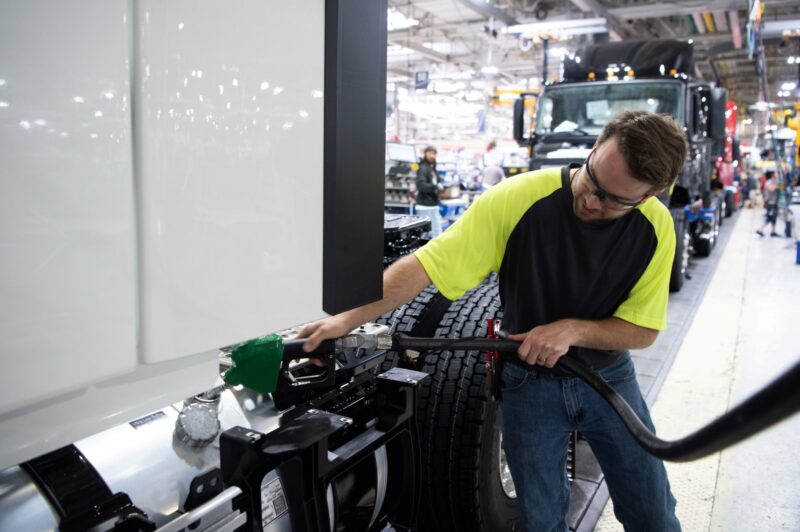
Yesterday, Oct. 15, 2006, was the official deadline for retailers to begin selling ultra low sulfur diesel in Canada and the U.S. But ULSD -- which brings the sulfur content in diesel down from 500 ppm to 15 ppm and is required for new, 2007 low emission engines which hit the market next year -- has been flowing from pumps in parts of Canada for months.
The cleaner-burning fuel will be the only truck diesel available in Canada, while in the U.S. the rule allows refiners to make both ULSD and conventional diesel for other markets until 2010, but in that case 80 percent of the fuel produced must be ULSD.
Non-ULSD must be labeled as such.
There isn't much around in Canada now
We Recommend:
- 'Blessing of the Pete’ Rekindles Moving Soldier Memorial
- Trucking for Wishes Needs Your Help. And All You Gotta Do is Like Them.
- Trucking Hero: “Something inside me made me stop.”
- Friday Focus: Driver Wages and The Driver Shortage
- Trucking Alliance Tells Carriers to Take Responsibility for Driver Shortage


Please Note:
While we value your feedback, please avoid profane or personal attacks. You should know that if your comment contains libelous, prejudicial or just plain wrong statements, it will be deleted.