It's that latter point that has made Schwartz's idea so popular with the general public and environmentally conscious politicians who say the DRIC concept doesn't do much to fix Windsor's air quality problems.
GreenLink, which is fully supported by Windsor Mayor Eddie Francis and a majority of city council, promises lush greenery covering the tunnels and overpasses. Much of the route would be insulated by parkland, which would include soccer fields, ice rinks and ponds. Most, importantly, says Schwartz, his plan would link neighboring communities rather than divide them.
"The community gets a highway that's designed to enhance the region and link communities that have been separated for years by walls of queuing trucks and traffic. It's never been pleasant to go back and forth between communities in Windsor," Schwartz tells TodaysTrucking.com in an interview.
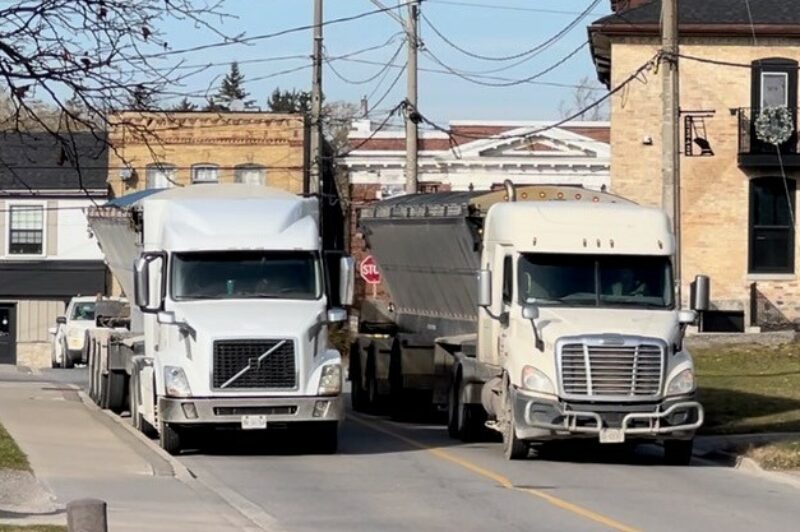
"At the same time, for trucks, it solves the long-standing problem created 50 years ago when the highway ended several miles away from the waterfront (and border). Truckers will now have a high-speed, limited access and fully controlled highway, with no traffic signals. And it'll have enough capacity to take us, I predict, to the end of the century."
While most green activists like Sam's plan, others, who want the route to be completely tunneled, insist it doesn't go far enough. Some locals suggest that the tunnels be fitted with scrubbers to capture pollutants and gases.
Schwartz tells us that his team researched the possibility, but after doing the calculations, they found that scrubbers would make "virtually no difference, primarily because pollution levels don't reach the kind of density in which they would be helpful.
"We don't really have a good enough technology that takes gases and turns them into oxygen -- other than trees."
He says dense foliage, based mainly at the portals of the tunnels, will naturally filter out particulate matter and trap carbon, while industrial jet fans will distribute pollutants away from residential areas.