
Nevertheless, the department has given it a try using its own testing mechanism in real-life field trials.
For the most part, Transport Canada is considerate of the theory that more trucks with activated speed limiters means less severe truck-car accidents on the highway.
However, the results also echo some of the warnings by groups like the Owner-Operator Business Association of Canada (OBAC), which, citing past literature on the matter, says that a greater differential in speed between cars and large trucks will result in more rear-end collisions and similar crashes.
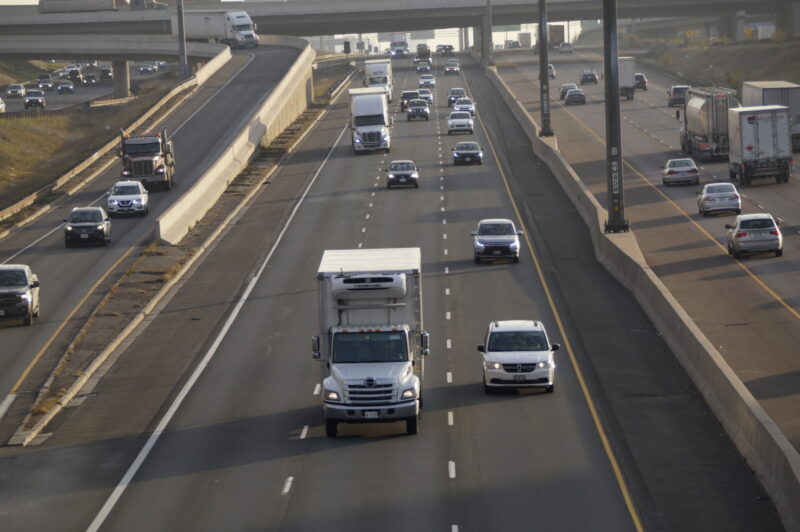
Essentially, Transport Canada concludes that the introduction of speed limiters set at 105 km/h increases safety in "uncongested region(s)." The maximum safety gains, though, were obtained when speed was set 15 km/h less -- at 90 km/h for uncongested volumes.
However, as the volume of traffic and percentage of trucks increased, the safety gains associated with limiters "become less pronounced."
"As the volume is set close to capacity (2000 vehicles per hour per lane) more vehicle interactions take place and this leads to a reduction in safety especially for those segments with increased merging and lane-change activity, such as, on and off ramp segments. In these instances the introduction of truck speed limiters can actually reduce the level of safety when compared to the non-limiter case."
The study also makes special mention of two-lane, undivided rural highways. While many restrict speed between 70 and 80 km/h (rendering a 105 km/h setting nearly irrelevant), some jurisdictions across Canada allow speeds of up to 100 km/h. Here, suggests the study, "implementation of mandatory speed limiters could lead to an "increase of passing manoeuvres onto the opposing traffic lane. The possibility for increased unsafe passing manoeuvres poses special safety challenges where trucks are subject to a maximum speed. Further study of this situation is required…"
COMPETITIVE FRONT
Overall, says Transport Canada, there could be some impact on trucking industry competitiveness within speed-limited jurisdictions. Any blowback would be most felt by small fleets and independent owner-operators since many large fleets already voluntarily govern their fleet speed.
That said, the government assumes that the increased fuel and vehicle operating costs of traveling at speeds above 105 km/h outweigh any productivity benefits currently reported by ungoverned truckers.
Regionally, Atlantic Canada would be most affected by an Ontario-Quebec speed limiter policy. "About 30 percent of that region's heavy truck fleet would need to set their speed-limiters accordingly due to the interaction of the Atlantic trucking industry with Quebec and Ontario," the report suggests.
In the west, only about 10 percent of the commercial truck population would be impacted by a Central Canadian limiter rule. However, a national mandate would shake up far more truckers in the west, especially as it relates to two-lane highway networks -- which are quite extensive in Saskatchewan and Alberta (both provinces have already dismissed the possibility of a speed limiter rule).
Moreover, many states south of the Prairies have higher speed limits of 70 mph and 75 mph, making it more difficult for Western truckers to operate south of the border.
As for our American brethren, most owner-operators and smaller fleets that routinely head north were very much concerned with being capped at 105 km/h, as it would place them at a disadvantage when traveling at home. As much as 80 percent of those interviewed indicated they would in the future avoid jurisdictions with a speed limiter mandate.
Considering the weakness of southbound lanes and shrinking volumes out of central Canada, though, it would be hard to find a major cross-border carrier that would miss them poking around for backhauls.